
Following the Camino de Santiago in Spain
· Updated · BootsnAll
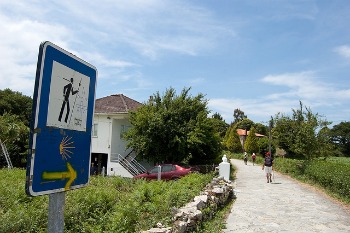 Adventure travel doesn’t always having to mean climbing mountains, rafting over rushing rapids, or throwing yourself off a cliff. Adventure travel is about pushing yourself to your limits in any way - physically, mentally or spiritually. If you’re in the mood for a lighter type of adventure, check out the Santiago de Compostela trail in Spain. Hiking the Camino has long been a favorite pilgrimage route for Spaniards, and now many tourists are getting in on the action.
The hiking route, officially called the Camino de Santiago (or Way of Saint James), but often called the Santiago de Compostela is a medieval pilgrimage route that ends at that town’s cathedral, which is said to be the burial place of Saint James the Great,. Saint James was one of the 12 apostles and supposedly, after he was killed, his remains were brought back to Galicia and a church at Santiago de Compostela was constructed to hold the holy relics.
During medieval times the walk was one of the most important Christian pilgrimages, and now it’s a UNESCO World Heritage Site. The walk is challenging in parts, and the whole of the main route, the Camino Frances, runs about 800 km and takes most people four to five weeks. Walk the last 100 km and you have done enough to collect the Compostela certificate at the cathedral. Along the way, those who have a credencial - a pilgim’s passport - get into the albergues, the pilgrim hostels. They are the cheap way to sleep but not a free one: most charge a modest nightly fee, the municipal ones often run on a donation, and meals are paid for. So budget for the bed and the food along with your flights to Spain, transport to the starting point, and a good pair of walking shoes.
This makes the route an excellent low-cost way to see the countryside and challenge youself to the physical and mental demands of a long-distance walk in Spain.
Photo by Jexweber.fotos